Danish Foreign Minister Warns Against U.S. Interest in Greenland
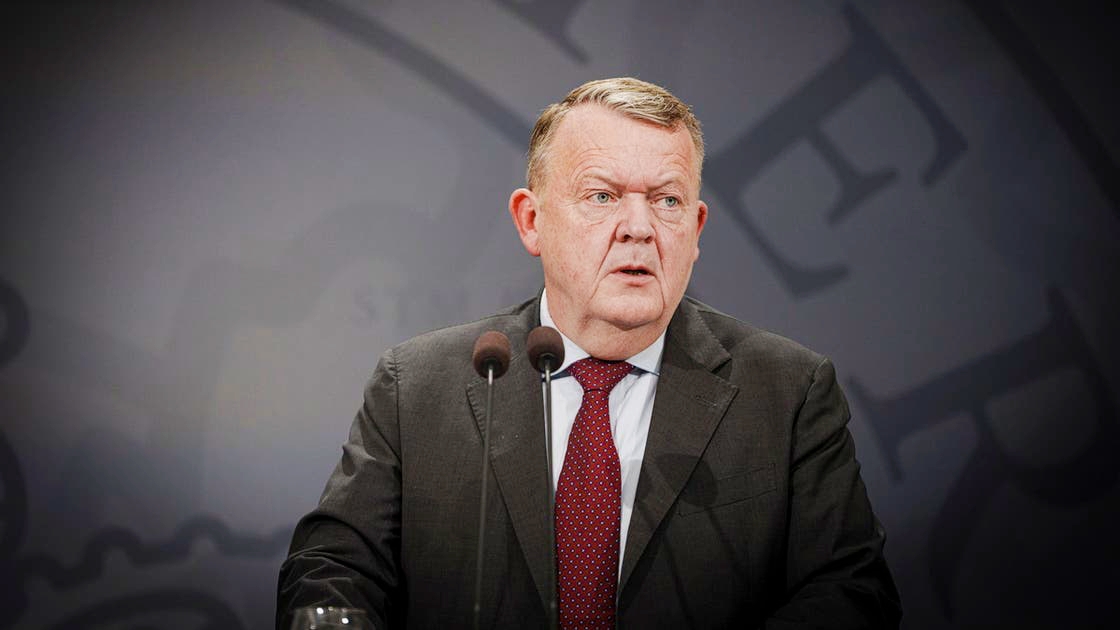
In a controversial statement, Danish Foreign Minister Lars Løkke Rasmussen remarked yesterday that U.S. President Donald Trump seems to have a desire to assert control over Greenland, following a meeting with U.S. officials at the White House.
Rasmussen stated:
"There is no reason for the United States to control Greenland," emphasizing that the Danish Kingdom has unsuccessfully attempted to change the American stance.
He added: "We have made it clear that any attempt to interfere with the island will not be in the Kingdom's interest."
The Danish Minister urged Washington to maintain a respectful and balanced collaboration with his country regarding the Arctic territory, stressing that any violation of Denmark's territorial integrity or the rights of Greenlanders to self-determination would be entirely unacceptable.
Rasmussen noted that the United States already enjoys extensive military rights in Greenland under the 1951 defense agreement, but additional requests to officially enhance their presence could arise, with Denmark considering these requests while respecting the Kingdom's boundaries.
He continued: "We have decided to form a high-level working group to find a joint approach to address American security concerns while respecting Greenland's sovereignty and Denmark's territorial integrity," expecting the group to hold its first meeting in the coming weeks.
The Danish Minister dismissed Trump's claims regarding Chinese warships near Greenland, pointing out that intelligence indicates the Chinese navy has not approached the island in the last decade.
He remarked: "This was an excellent opportunity for us and Greenland's Minister, Vivian Motzfeldt, to refute this false narrative."
Rasmussen confirmed that the meeting with U.S. Secretary of State Marco Rubio and Vice President J.D. Vance was productive, highlighting an open exchange among equal partners, while Motzfeldt emphasized that Greenland is interested in strengthening cooperation with the United States, not becoming "their property."