Israel Report Warns of Egypt's Advances in Military Artificial Intelligence
February 8, 202648 AufrufeLesezeit: 2 Minuten
Schriftgröße
16
A report published in the Israeli newspaper "Ma'ariv" highlights Egypt's advancements in military artificial intelligence, viewing this shift as a potential strategic change that could alter the balance of power in the region.
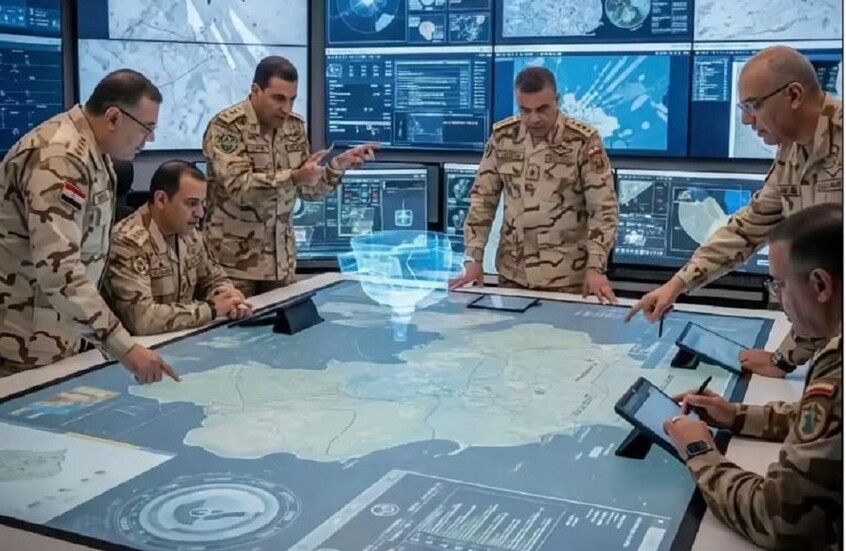
The report notes that Cairo is not solely focused on modernizing traditional combat systems such as tanks and aircraft but is instead developing an integrated digital system based on advanced software, data analysis, and automated decision-making processes.
Efforts Toward Technical and Military Independence
The report explains that Egypt aims to achieve operational independence in the field of artificial intelligence by reducing reliance on foreign technologies and strengthening control over algorithms and command-and-control systems. It adds that this direction reflects a modern military vision based on the ability to independently process data and retrain intelligent models even during crises and military operations.
Integration of Artificial Intelligence in Intelligence and Drones
According to the report, the Egyptian military is working to integrate artificial intelligence technologies into intelligence systems and unmanned aerial vehicles, in addition to command-and-control systems. It highlights that these technologies enable faster analysis of data collected from sensors and drones, thereby accelerating decision-making processes and reducing operational risks.
Reducing Dependence on Western Systems
The report emphasizes that Egypt aims to decrease its reliance on Western software and cloud computing services from external providers by collecting data domestically and developing artificial intelligence models locally. According to the newspaper, this approach allows for independent processing of intelligence information and reduces the likelihood of surveillance or technical restrictions while shortening the time for military decisions.
The "Hamza 2" Drone as a Test Platform for Intelligent Systems
The report mentions that the Egyptian drone "Hamza 2" is being used as a platform to test systems for operational autonomy, with technologies for computer-based vision for target identification and route planning being evaluated. It emphasizes that these systems are designed for use under conditions of electronic interference or communication failures, enhancing operational efficiency in complex combat environments.
Technological Collaboration with China to Accelerate Development
The report also discusses the role of technical collaboration between Egypt and China in supporting artificial intelligence projects, noting Beijing's experience in developing these technologies within advanced computing frameworks. It adds that this collaboration includes the development of models for natural language processing in Arabic, including the analysis of regional dialects for use in intelligence analysis.