Study Compares Human and AI Creativity: Insights on the Nature of Creativity
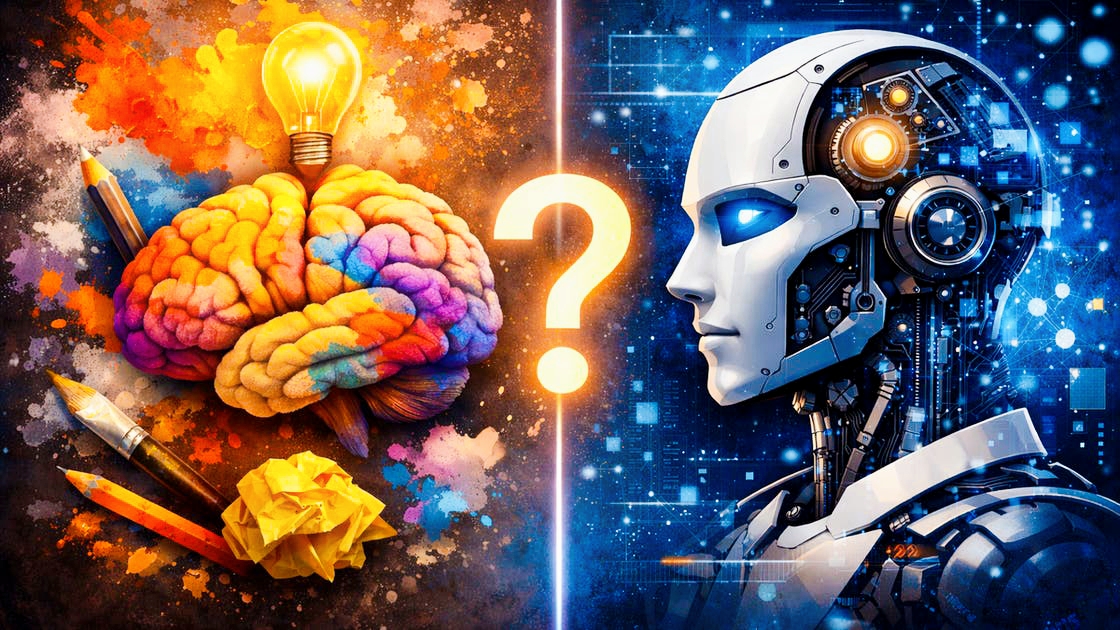
In a groundbreaking study conducted by researchers at the University of Montreal, Canada, the creative capabilities of humans were compared to those of advanced generative artificial intelligence models.
The research involved over 100,000 human participants and assessed the performance of AI models including ChatGPT, Claude, and Gemini.
To objectively measure creativity, the team employed the Divergent Association Task (DAT), a psychological tool that requires participants to generate 10 words in four minutes that are minimally related to one another. A lower degree of connection between the words was deemed indicative of greater creativity.
The same task was also assigned to the AI models.
The findings revealed that large language models outperformed the majority of human participants in this task; however, approximately half of the human participants surpassed the AI, with the top 10% displaying particularly exceptional performance.
Professor Karim Jerbi from the university's psychology department noted that this study encourages a reevaluation of our understanding of creativity, suggesting that AI can serve as a tool to assist human creative endeavors rather than act as a direct competitor.
The researchers acknowledged that despite the study's large scale, it remains limited by the standards and measurements utilized, particularly since human creativity is inherently challenging to quantify compared to computer-based models. Nevertheless, their results open new avenues for collaboration between humans and machines in creative fields.