The Future of Earth: Scientific Insights on Its Ultimate Fate
While discussions about the end of the Earth may sound like a plot from a science fiction film, scientists affirm that the reality is both alarming and awe-inspiring.
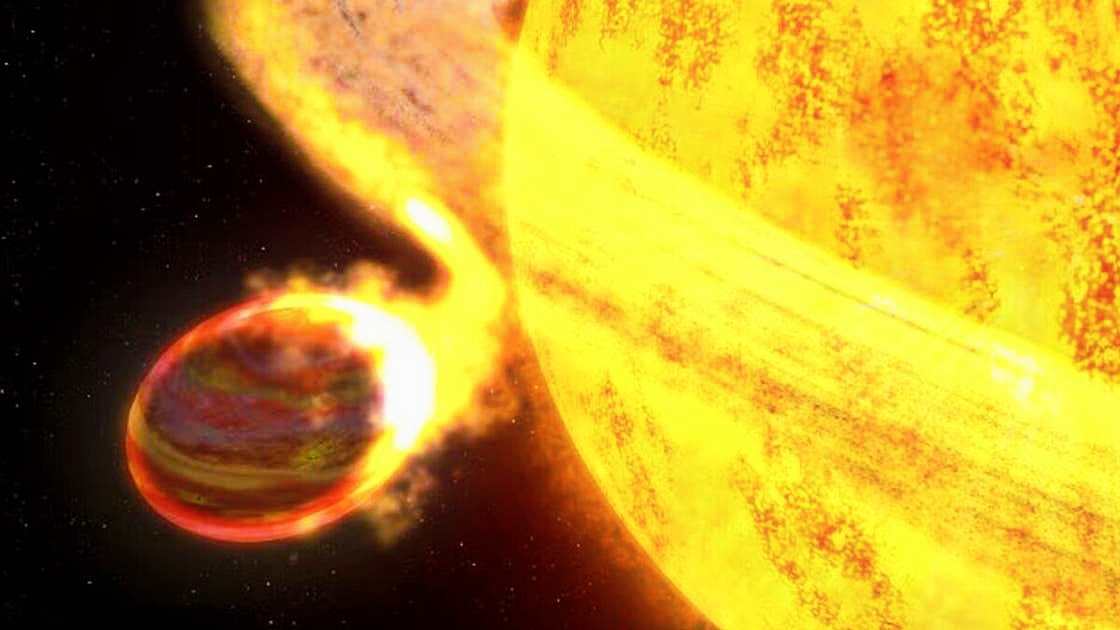
According to recent scientific projections from NASA, Earth will not face an abrupt disappearance or explosion. Instead, it will undergo a slow and prolonged demise as it eventually succumbs to the Sun, which will expand into a red giant in approximately five billion years.
* Dying Sun and the End of the Solar System
Experts explain that the Sun will gradually exhaust its nuclear fuel, hydrogen, which has maintained its internal balance for billions of years.
As this fuel diminishes, the balance between gravitational forces and energy from nuclear fusion will be disrupted, causing the Sun to expand significantly.
During this phase, the Sun will transform into a red giant, potentially growing 100 to 200 times larger than its current size. This scenario poses a threat to Earth, which may either be engulfed by the expanding Sun or torn apart by its immense gravity.
* The Spiral Nebula: A Glimpse into Our Future
These predictions are based on remarkable observations from the James Webb Space Telescope, which has provided detailed images of a spiral nebula located about 650 light-years from Earth.
This nebula is the remnant of a star similar to our Sun that exhausted its fuel thousands of years ago, leaving behind a vast shell of gas and dust that spans nearly three light-years.
These images offer scientists a concerning yet close view of the potential fate awaiting our solar system.
* From Red Giant to White Dwarf
In the later stages of the Sun's life, increased temperatures in its core will lead to helium fusion, transforming it into carbon. This process releases significant energy and further expands the outer layers.
In its final phase, the Sun's core will collapse into a dense white dwarf about the size of Earth, while its outer layers will shed and disperse into space, creating a planetary nebula similar to the spiral nebula.
Images from the James Webb reveal that radiation from the white dwarf continues to shape complex structures within the nebula, showcasing a stark contrast between hot and cold gas regions where complex molecules and dust grains form.
* An End That Does Not Mean Total Destruction
Despite the grim outlook for Earth, astronomers emphasize that this process is not merely about disappearance; it is part of a larger cosmic cycle.
The chemically enriched materials expelled into space after the death of stars nourish the interstellar medium, eventually serving as the building blocks for new generations of stars and planets, potentially giving rise to other worlds capable of supporting carbon-based life.
Thus, the end of Earth may simply be the seed for the birth of new worlds elsewhere in the universe—a destructive conclusion, indeed, but simultaneously a new cosmic beginning.