Mystery Surrounds Large Chest Inside Umayyad Mosque in Damascus
December 4, 2025695 VuesTemps de lecture: 2 minutes
Taille de police
16
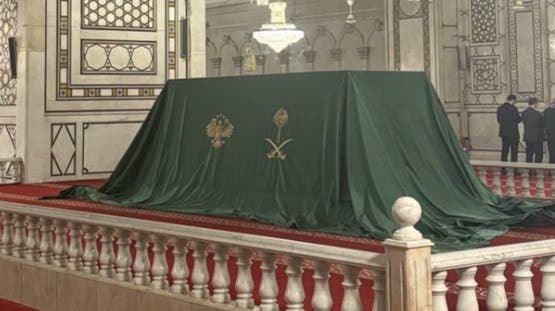
Recent social media posts have sparked controversy over a large chest spotted inside the Umayyad Mosque in Damascus, Syria, now secured by increased security measures.
Videos circulating online depict the chest draped in a green cloth featuring the logos of both the Kingdom of Saudi Arabia and the Syrian Arab Republic. However, no official explanation has been provided regarding its contents or the reason for its presence in this significant religious and historical site.
Activists have reported that the chest is believed to be a gift from Saudi Arabia to Syria, set to be unveiled on December 8, coinciding with the first anniversary of the fall of Bashar al-Assad's regime, referred to as the "Liberation Day."
Sources suggest that the gift may contain materials for restoration or decorative elements related to the historical sites within the mosque. It could also be linked to the protection or rehabilitation of the shrine of John the Baptist, whose head is said to be buried in the mosque. Conversely, some Saudi news outlets have indicated that the chest might hold a recent piece of the Kaaba's curtain.
As of this writing, no official statements have been released by Syrian or Saudi authorities clarifying the contents or details of the chest.
The Umayyad Mosque is one of the oldest and most significant mosques in the Islamic world, built under the Umayyad caliph Al-Walid ibn Abd al-Malik between 705 and 715 CE. It holds considerable religious and historical importance for Syrians and Muslims globally.
The mosque is notable for being the first to feature a mihrab, due to its earlier architectural history as a church. Its northern minaret is the oldest of its three minarets and was used as a lighthouse for the city of Damascus during the Middle Ages, influencing architectural styles across the Middle East, North Africa, and Andalusia.
Videos circulating online depict the chest draped in a green cloth featuring the logos of both the Kingdom of Saudi Arabia and the Syrian Arab Republic. However, no official explanation has been provided regarding its contents or the reason for its presence in this significant religious and historical site.
Activists have reported that the chest is believed to be a gift from Saudi Arabia to Syria, set to be unveiled on December 8, coinciding with the first anniversary of the fall of Bashar al-Assad's regime, referred to as the "Liberation Day."
Sources suggest that the gift may contain materials for restoration or decorative elements related to the historical sites within the mosque. It could also be linked to the protection or rehabilitation of the shrine of John the Baptist, whose head is said to be buried in the mosque. Conversely, some Saudi news outlets have indicated that the chest might hold a recent piece of the Kaaba's curtain.
As of this writing, no official statements have been released by Syrian or Saudi authorities clarifying the contents or details of the chest.
The Umayyad Mosque is one of the oldest and most significant mosques in the Islamic world, built under the Umayyad caliph Al-Walid ibn Abd al-Malik between 705 and 715 CE. It holds considerable religious and historical importance for Syrians and Muslims globally.
The mosque is notable for being the first to feature a mihrab, due to its earlier architectural history as a church. Its northern minaret is the oldest of its three minarets and was used as a lighthouse for the city of Damascus during the Middle Ages, influencing architectural styles across the Middle East, North Africa, and Andalusia.