Trump Questions Reza Pahlavi's Ability to Unite Support in Iran
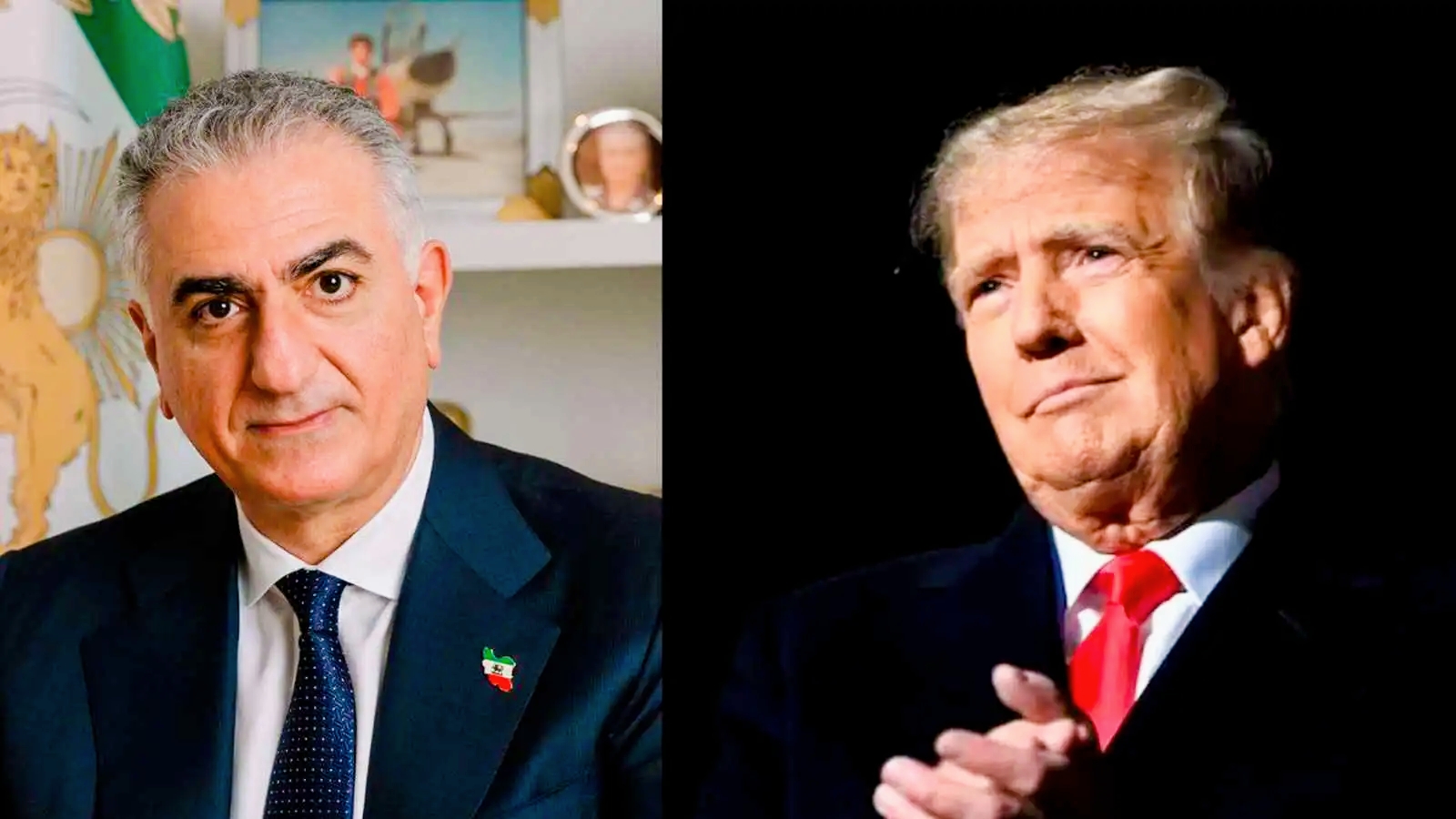
In a notable interview, former U.S. President Donald Trump raised doubts about the ability of Iranian opposition leader Reza Pahlavi to gain popular support in Iran and potentially assume power, although he described Pahlavi as "looking very sympathetic."
This interview took place in the Oval Office as Iran continues to experience widespread protests.
Trump mentioned that the possibility of the Iranian government collapsing "exists," but he emphasized that he is not ready to offer full support to Pahlavi at this time.
He stated: "I don't know how he will perform in his own country... We are not at that stage yet," adding:
"I don't know if his people will accept his leadership, but if they do, that would be fine with me."
Trump has previously suggested the possibility of intervening to support protesters in Iran, amid reports of hundreds of fatalities during a crackdown on demonstrations against the regime.
However, he refrained from explicitly endorsing Pahlavi, the son of Iran's last Shah, who was overthrown during the 1979 revolution, stating that he does not plan to meet him at this time.
At 65 years old, Reza Pahlavi has lived in the United States since before his father's regime fell and has become a significant voice in favor of the protests.
Nonetheless, Trump implied a deep division within the Iranian opposition and a decline in its organized presence in the country, raising concerns about Pahlavi's ability to provide a unified political alternative.
Regarding the future situation in Tehran, Trump commented:
"It is likely that the government will fall due to the protests, but the truth is that no regime can succeed," adding:
"Whether the regime falls or not, we are in an interesting period."
* Zelensky Criticized
In the context of the war in Ukraine, Trump severely criticized Ukrainian President Volodymyr Zelensky, labeling him as "the main obstacle" to reaching an agreement with Russia to end the four-year conflict.
Trump, who promised during his campaign to end the war "in a day," stated that Russian President Vladimir Putin "is ready to make a deal."
When asked why negotiations are stalled, Trump simply replied: "Zelensky," adding:
"We need to get President Zelensky to accept this."
* A Busy First Year and Internal Calculations
The interview coincides with Trump nearing the end of his first year of his second presidential term, where he was seen seated behind his desk in the Oval Office, sipping a soda while holding a large binder that he claimed documented his achievements since his inauguration on January 20, 2025.
Regarding the upcoming midterm elections in November, Trump acknowledged that the ruling party often loses seats after two years of presidential elections, but he emphasized his determination to fight hard, stating: "When you win the presidency, you generally do not win the midterm elections... but we are going to try to win."
Trump's remarks, which intertwined Iranian and Ukrainian issues, reflect a politically charged period both domestically and internationally, raising significant questions about Washington's direction in the Middle East and Europe in the coming months.