Flights to Tehran Resume Following Lift of Temporary Airspace Ban
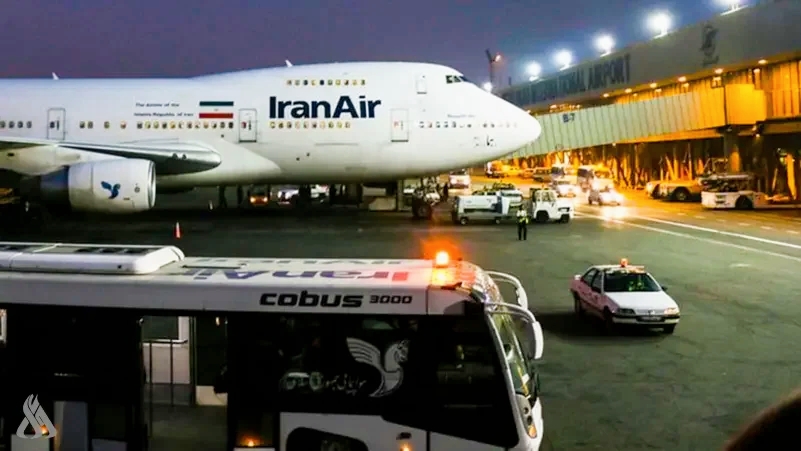
After a period of uncertainty, Iranian authorities have lifted a temporary airspace ban that lasted longer than anticipated, allowing some flights to resume to the capital, Tehran.
The airspace restriction, imposed earlier today, raised questions about the rationale behind the decision, particularly given the heightened tensions between Tehran and Washington amid ongoing protests across Iran.
* Airspace Ban: No Explanation Provided, Reasons Unclear
Early in the day, Iranian officials announced the extension of the airspace ban for commercial flights without offering an official explanation. Aviation monitoring services like "Flightradar 24" reported closely on flight movements, indicating that the ban was expected to lift around 7:30 AM local time, after lasting over two hours.
The Iranian government has not clarified the reasons for this sudden decision.
* Trump Takes a Softer Stance: "Killings of Protesters Decrease"
In this context, U.S. President Donald Trump appeared more measured on Wednesday regarding the situation in Iran, stating that "the killings of Iranian protesters have begun to decline."
Trump noted in statements reported by Reuters that there is currently no "plan for widespread executions," despite ongoing tensions between Tehran and Washington.
He also hinted at the possibility of the Iranian government collapsing in the near future.
* UN Security Council Monitoring Developments: Urgent Meeting Today
As the crisis escalates, the UN Security Council will hold an urgent meeting today to discuss the situation in Iran at the request of the United States.
This session aims to address the implications of the ongoing protests in Iran and related events, including the repression against demonstrators.
* Mutual Accusations Between Tehran and Washington
On the other hand, Iranian Foreign Minister Abbas Araghchi accused "terrorists" of infiltrating the demonstrators, claiming they have fired upon both protesters and security forces to increase the death toll.
Tehran views this as an attempt to escalate tensions and provoke direct U.S. intervention in the Iranian crisis.
* Protests and Calls for International Intervention
It is important to note that protests in Iran began on December 28 of last year and, according to human rights organizations, have resulted in hundreds of deaths due to the difficult economic and political situation and the repressive measures against protesters.
In this context, Trump has repeatedly threatened to support Iranian demonstrators, raising concerns about potential external interference in Iran's affairs.
As the crisis deepens daily, international observers are closely monitoring developments in Iran, where the situation is likely to become increasingly complex due to ongoing internal and external tensions.