Cornell Engineers Create Ultra-Black Material Inspired by Bird from Venice
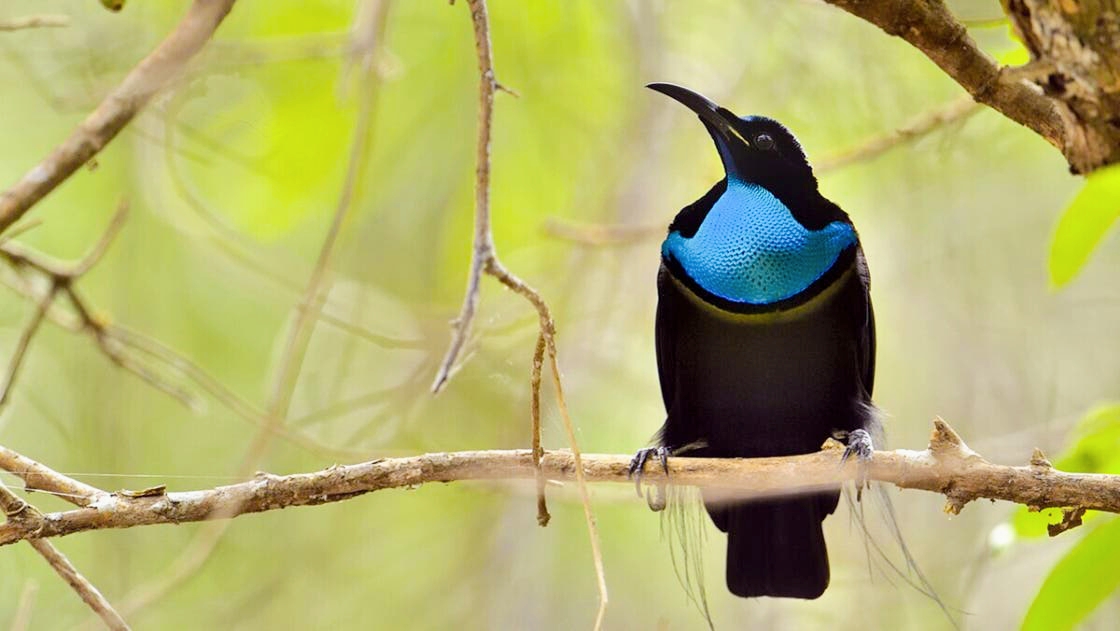
Engineers at Cornell University have created a unique material that absorbs 99.87% of incoming light, ranking it among the darkest materials available, according to a report on Science Alert, based on findings published in Nature Communications.
Rather than simply dyeing the fabric a standard color, the researchers focused on manipulating the material's structure at the nanoscale to enhance light absorption.
The fabric, made from white Merino wool, was dyed with a synthetic melanin polymer called polydopamine before being placed in a plasma chamber to create fine nanofibers that trap light, allowing rays to reflect back and forth between the fibers instead of escaping, giving the material its exceptional darkness.
* Inspiration from Nature
This innovation was inspired by the bird from Venice, Ptiloris magnificus, native to New Guinea and northern Australia, known for its iridescent blue-green chest contrasting with its dark plumage.
While the new material surpasses the bird in some respects, the bird exhibits its deepest darkness when viewed directly but reflects light when seen at an angle. In contrast, the Cornell material maintains its light absorption even at angles of up to 60 degrees from both sides.
* Artistic Applications
Cornell fashion design student Zoe Alvarez created a stunning dress from the new material, featuring a gradient from darkness to deep black, with a blue-green center that artistically represents the beauty of the bird from Venice.
* Accessible Innovation
While materials like Vantablack absorb up to 99.96% of light and carbon nanotube materials from the Massachusetts Institute of Technology have achieved up to 99.995% absorption, these materials are often expensive and complex to produce.
However, the new Cornell material is characterized by its straightforward manufacturing process and relatively low cost, making it suitable for mass production.
The innovation from Cornell University opens new avenues in the world of textiles and design, showcasing how nature can inspire technology in remarkable and unparalleled ways.