Egyptian Philosopher Murad Wahba Passes Away at 100, Leaving a Legacy of Enlightenment and Resistance to Extremism
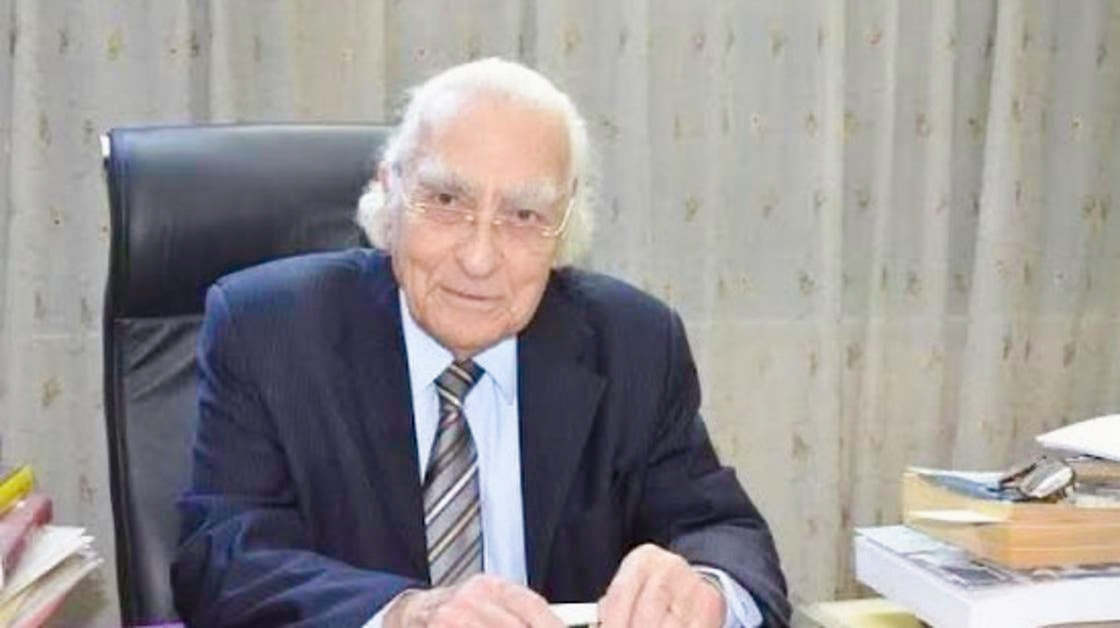
Dr. Murad Wahba, the renowned Egyptian philosopher, passed away today at the age of 100, leaving behind a substantial intellectual legacy that has shaped contemporary Arab thought.
Dr. Wahba served as a professor of philosophy at Ain Shams University and was the president of the International Ibn Rushd Society, recognized as a leading advocate for enlightenment and secularism in Egypt and the broader Arab region.
The Minister of Culture, Dr. Ahmed Fouad Henu, expressed his condolences, highlighting that Dr. Wahba's extensive philosophical contributions significantly advanced a culture of dialogue and scientific reasoning, enriching the intellectual landscape for decades.
Dr. Wahba was known for his courageous stance against extremist ideologies and political Islam groups, establishing a philosophical school that has stood as a bulwark against fundamentalist calls for over seventy years.
His intellectual project centered on the revival of "Rationality", named after the philosopher Ibn Rushd, viewing critical thinking and enlightened ideas as essential for securing humanity's future.
As a staunch proponent of secularism, Dr. Wahba argued that it is not opposed to religion but rather delineates between the "Absolute" and the "Relative" to prevent the exploitation of the sacred in political conflicts.
His book, "The Angel of Absolute Truth", left a distinct intellectual mark by exposing the notion of possessing absolute truth as a primary source of terrorism and extremism, while discussing the "paradox between reason and fundamentalism," a theme he vigorously debated throughout his life.
Born in 1926 in Assiut, Egypt, Dr. Wahba earned a Bachelor’s degree in Philosophy from Fuad I University in 1947, followed by a PhD in contemporary philosophy from Alexandria University in 1959.
He began his career as a teacher and later became an assistant professor of philosophy at Ain Shams University, advancing to various academic positions and lecturing at several Russian and Western universities. He also led the Department of Humanistic Studies at the Center for Middle Eastern Studies.
The passing of Dr. Wahba signifies the end of an era of enlightened thought and the continuation of a long legacy of intellectual struggles against extremism, ensuring his name remains a symbol of secularism and rationality in the Arab world.