Libya's Prime Minister's Wife Makes Rare Public Appearance, Sparking Debate
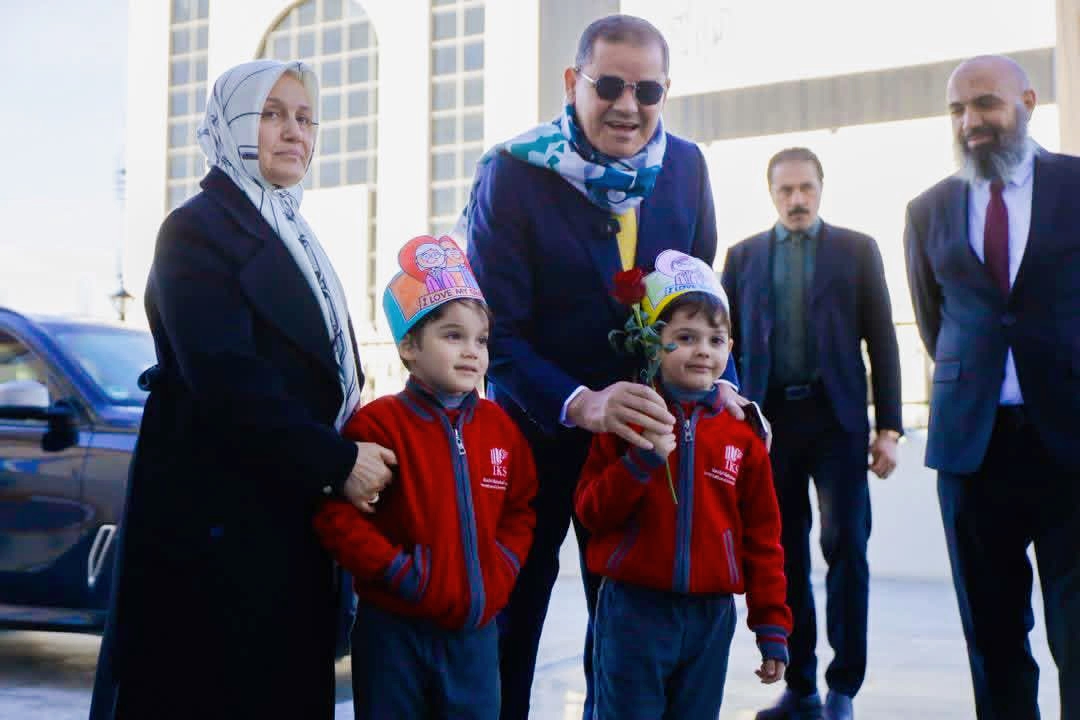
In a rare public appearance, the wife of Libyan Prime Minister Abdelhamid Dbeibah attended a social event alongside him, drawing significant attention and sparking discussions on social media. This event marks a notable departure from Dbeibah's previous practice of keeping his family out of the media spotlight.
She appeared with Dbeibah yesterday, Sunday, during a celebration at a primary school in Misrata, where they participated in a special event for "Grandparents' Day" alongside their grandchildren from Dbeibah's late son, Abdel Rahman.
The family-oriented nature of the event quickly became a topic of public discourse.
Dbeibah is known for his personal political style, yet he has been cautious about showcasing his family, making this appearance of his wife particularly noteworthy, even though no personal details about her were disclosed.
The reactions extended beyond sharing photos and videos, leading to a broader community debate regarding the role of officials' spouses and their involvement in public life. Activist Maisa Al-Rim Al-Qatari stated that the Prime Minister's wife's appearance is "not merely a fleeting social presence, but a political and cultural message that reflects the place of women in Libyan society, inspiring them to engage in public spaces."
Al-Qatari further noted that the absence of officials' wives could suggest that public spaces are not safe or welcoming for women, while their presence sends a reassuring message that women have a legitimate role in society.
Activist Rihane Al-Hadi commented that Dbeibah's wife's public presence is "very necessary," stating, "While I may disagree with Dbeibah as a leader or as a person, the presence of his wife in the social and political arena carries undeniable positive meanings."
Conversely, activist Ahmed Kabouti expressed a differing view, suggesting that "the best role for women is to take a step back, supporting their husbands and children without directly engaging in political matters."
This intense debate highlights the differing perspectives within Libyan society regarding women's roles and their limits in public participation, with some viewing them as essential partners in the social and political sphere, while others prefer they remain out of the spotlight.
Amidst support and opposition, the appearance of Dbeibah's wife marks an exceptional moment that challenges a longstanding tradition of familial privacy, opening up discussions on women's representation, political symbolism, and the boundaries between private and public life in contemporary Libya.