Angelina Jolie Visits Rafah: Highlighting the Humanitarian Crisis in Gaza
January 2, 2026169 VuesTemps de lecture: 3 minutes
Taille de police
16
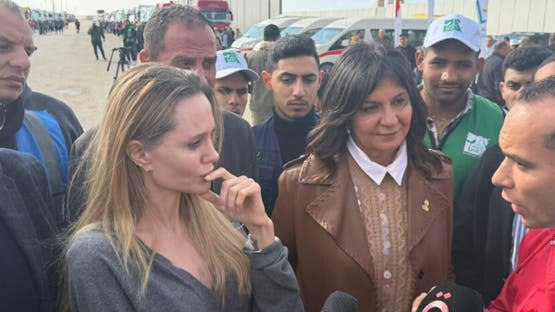
During a significant humanitarian visit that carried deep political and ethical messages, American actress Angelina Jolie arrived in northern Sinai and at the Rafah crossing to witness firsthand the extent of the humanitarian crisis affecting Palestinians in Gaza, stating that what she observed "defies description."
A Ground Visit to the Heart of Suffering
Jolie was accompanied by Ambassador Nabila Makram Ebeid and U.S. State Department representative Arwa Jayeeri. The visit included a stop at Al-Arish General Hospital, which is increasingly treating Palestinian casualties. There, Jolie listened to heartbreaking accounts from bombing victims and checked on their health, praising the tireless efforts of Egyptian medical teams.
“Inexpressible Stories”
In her discussions with medical teams and injured individuals, Jolie remarked that the human suffering and stories of loss and pain she witnessed "exceeded the capacity of words to convey," and described the work of medical personnel at Al-Arish as heroic, emphasizing that saving lives under such challenging conditions exemplifies rare human sacrifice.
Rafah… A Lifeline Under Pressure
The governor of northern Sinai, General Khaled Mjawar, was among the first to welcome the delegation, highlighting the Sinai's critical role as the only lifeline for Gaza. The group then inspected humanitarian aid warehouses, where Jolie learned about the sorting and preparation processes, commending the organization and precision involved in managing aid convoys.
International Coordination and Political Messages
At the Rafah crossing, Jolie observed the passage procedures and coordination mechanisms with the Egyptian Red Crescent. Ambassador Nabila Makram Ebeid confirmed that Egypt "opens its heart before its borders," stressing ongoing efforts to overcome obstacles to aid delivery. Meanwhile, the U.S. State Department representative indicated that the visit aimed to assess urgent needs and ensure that aid matches the scale of the crisis, especially with the harsh winter approaching.
International Warnings of Total Collapse
The visit coincided with a joint statement from foreign ministers of eight Arab and Islamic countries, warning of an accelerated humanitarian collapse in Gaza. They stated that approximately 1.9 million displaced individuals face unprecedented dangers due to ongoing bombings, blockades, and harsh weather conditions. The statement emphasized that winter has exposed the fragility of the humanitarian situation, with displaced camps becoming flooded and suffering from severe shortages of heating and basic services, alongside warnings of an imminent health disaster and the spread of epidemics, particularly among children, women, and the elderly.
Closed Crossing and Open Crisis
This comes at a time when the Rafah crossing remains a point of political tension, following Israel's previous refusal to fully open it to the injured and aid, despite U.S. pressures to maintain it as an open humanitarian corridor between Gaza and Egypt.