Unusual Rock on Mars Sparks Debate Over Extraterrestrial Life
November 23, 2025637 VistasTiempo de lectura: 2 minutos
Tamaño de fuente
16
Recent findings of an unusual rock on the surface of Mars have reignited scientific discussions about the potential for signs of life beyond Earth. Preliminary studies indicate that the rock does not match typical Martian geology and contains unusually high levels of metals.
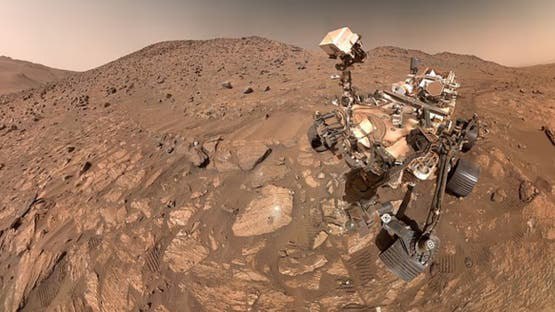
The rock, named "Vibsaqsla," was detected by NASA's Perseverance rover near the edge of Jezero Crater, an area believed to have once harbored ancient water and possibly life. Its sculpted appearance and unusual composition quickly drew the attention of scientists.
Measuring approximately 80 centimeters in diameter, the rock was analyzed using the rover's SuperCam, which employs lasers to study materials. The analysis revealed an exceptionally high concentration of iron and nickel, elements typically associated with metallic meteorites originating from outside Mars.
Dr. Candice Bedford from Purdue University, a member of the Perseverance operations team, noted that the specific mix of iron and nickel often points to meteorites formed in the cores of large asteroids within the solar system, supporting the idea that this rock may not be of Martian origin.
Since its landing in 2021, the Perseverance rover has been investigating the geology of the northern region of Jezero Crater, a site of significant scientific interest due to evidence suggesting it was once filled with water. During its recent exploration of the Vernoden area at the top of the crater, the rover captured images of the rock in question.
While finding meteorites is common on a cratered planet like Mars, the high concentration of heavy metals in this particular rock is extremely rare. Professor Gareth Collins from Imperial College London stated that Mars experiences meteorite impacts almost daily, but only about one in twenty meteorites is rich in iron and nickel.
Dr. Gareth Dorian from the University of Birmingham suggested that the meteorite might have originated from the asteroid belt, noting that metallic meteorites can survive atmospheric entry due to their hardness and resistance to weathering.
Although scientists believe the rock is likely a common space meteorite, its unusual composition and exceptional characteristics continue to raise questions about potential undiscovered secrets in the depths of the solar system.
The rock, named "Vibsaqsla," was detected by NASA's Perseverance rover near the edge of Jezero Crater, an area believed to have once harbored ancient water and possibly life. Its sculpted appearance and unusual composition quickly drew the attention of scientists.
Measuring approximately 80 centimeters in diameter, the rock was analyzed using the rover's SuperCam, which employs lasers to study materials. The analysis revealed an exceptionally high concentration of iron and nickel, elements typically associated with metallic meteorites originating from outside Mars.
Dr. Candice Bedford from Purdue University, a member of the Perseverance operations team, noted that the specific mix of iron and nickel often points to meteorites formed in the cores of large asteroids within the solar system, supporting the idea that this rock may not be of Martian origin.
Since its landing in 2021, the Perseverance rover has been investigating the geology of the northern region of Jezero Crater, a site of significant scientific interest due to evidence suggesting it was once filled with water. During its recent exploration of the Vernoden area at the top of the crater, the rover captured images of the rock in question.
While finding meteorites is common on a cratered planet like Mars, the high concentration of heavy metals in this particular rock is extremely rare. Professor Gareth Collins from Imperial College London stated that Mars experiences meteorite impacts almost daily, but only about one in twenty meteorites is rich in iron and nickel.
Dr. Gareth Dorian from the University of Birmingham suggested that the meteorite might have originated from the asteroid belt, noting that metallic meteorites can survive atmospheric entry due to their hardness and resistance to weathering.
Although scientists believe the rock is likely a common space meteorite, its unusual composition and exceptional characteristics continue to raise questions about potential undiscovered secrets in the depths of the solar system.