Scientists Map Solar Atmosphere's 'Point of No Return' for the First Time
December 16, 2025259 VistasTiempo de lectura: 2 minutos
Tamaño de fuente
16
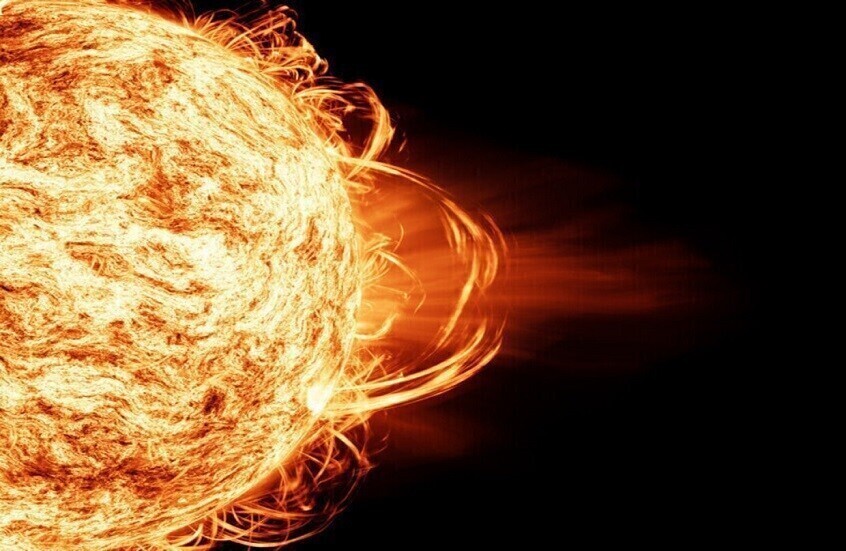
Astronomers have successfully mapped the outer edges of the solar atmosphere for the first time, a region scientifically referred to as the Alfven surface. This boundary marks the "point of no return" where solar material transitions from being controlled by the sun's magnetic field to a free-flowing state that heads into space, forming what are known as solar winds.
Dynamic Solar Boundary
Researchers integrated direct measurements from NASA's Parker Solar Probe with data from other spacecraft, revealing that these boundaries are not static but rather dynamic, changing with the sun's activity.
Sam Badman, an astrophysicist at the Harvard-Smithsonian Center and lead author of the study, stated, "For the first time, we have an accurate map that can serve as a navigation guide in this critical region. We can now observe real-time transformations and compare them with direct measurements, providing deeper insights into solar processes."
Boundary Changes with Solar Activity
As the sun approaches its peak activity in its 11-year cycle, the solar boundaries expand and become more jagged, while they smooth out during solar calm periods. This discovery allows scientists to enhance models for predicting solar storms, which can disrupt electrical grids on Earth and threaten the safety of astronauts and satellites.
Insights into Other Stars
The research also suggests that these findings could be applied to understand the atmospheres of other stars in our galaxy. Through repeated flybys of the Parker Solar Probe in the outer solar atmosphere and using the specialized SWEAP instrument, scientists obtained direct samples from beneath the Alfven surface, accurately identifying when and where solar winds escape the sun's magnetic grip.
Future Solar Studies
Research teams plan to return the Parker Probe during the next solar calm period, allowing them to observe changes in the solar boundary throughout a complete solar cycle. Scientists hope this study will help resolve one of the major mysteries in solar physics:
> Why does the solar corona heat up as one moves away from its surface?
Dynamic Solar Boundary
Researchers integrated direct measurements from NASA's Parker Solar Probe with data from other spacecraft, revealing that these boundaries are not static but rather dynamic, changing with the sun's activity.
Sam Badman, an astrophysicist at the Harvard-Smithsonian Center and lead author of the study, stated, "For the first time, we have an accurate map that can serve as a navigation guide in this critical region. We can now observe real-time transformations and compare them with direct measurements, providing deeper insights into solar processes."
Boundary Changes with Solar Activity
As the sun approaches its peak activity in its 11-year cycle, the solar boundaries expand and become more jagged, while they smooth out during solar calm periods. This discovery allows scientists to enhance models for predicting solar storms, which can disrupt electrical grids on Earth and threaten the safety of astronauts and satellites.
Insights into Other Stars
The research also suggests that these findings could be applied to understand the atmospheres of other stars in our galaxy. Through repeated flybys of the Parker Solar Probe in the outer solar atmosphere and using the specialized SWEAP instrument, scientists obtained direct samples from beneath the Alfven surface, accurately identifying when and where solar winds escape the sun's magnetic grip.
Future Solar Studies
Research teams plan to return the Parker Probe during the next solar calm period, allowing them to observe changes in the solar boundary throughout a complete solar cycle. Scientists hope this study will help resolve one of the major mysteries in solar physics:
> Why does the solar corona heat up as one moves away from its surface?