Study Compares Human and AI Creativity: Findings Challenge Traditional Notions
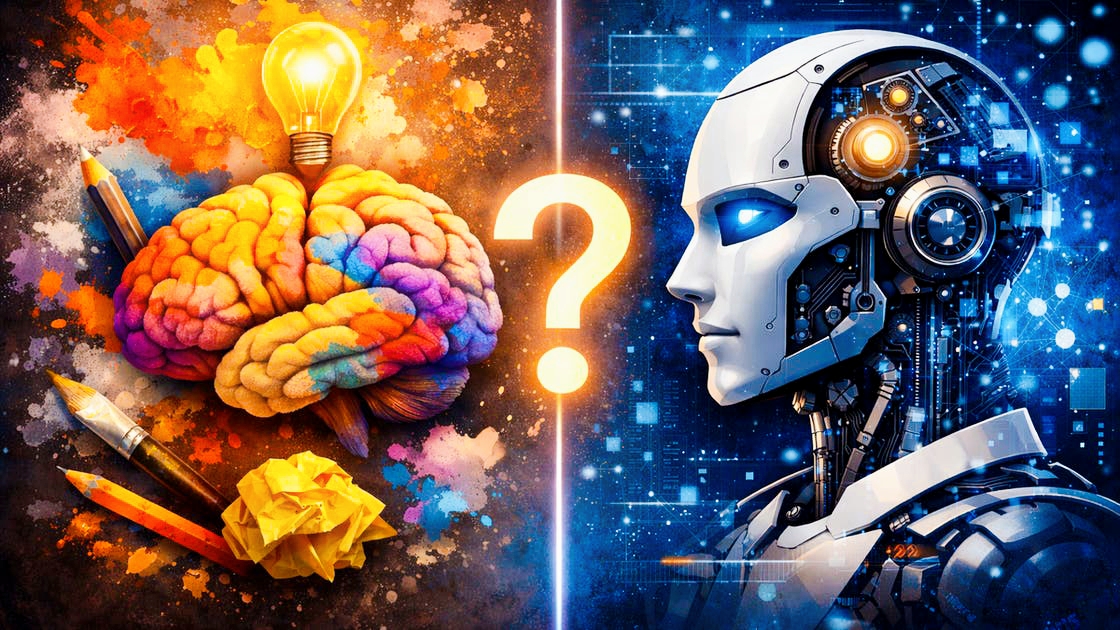
In the largest study of its kind, researchers from the University of Montreal in Canada assessed the creative abilities of humans compared to contemporary generative artificial intelligence models.
The study involved over 100,000 human participants and evaluated the performance of AI models such as ChatGPT, Claude, and Gemini.
To scientifically and objectively measure creativity, the team employed the Divergent Association Task (DAT), a psychological tool that requires participants to generate 10 words in 4 minutes that are as unrelated as possible; the less related the words, the more creative the performance is deemed.
The same task was also administered to the AI models.
Results indicated that large language models outperformed most human participants in this task, although approximately half of the human participants surpassed the AI. Notably, the top 10% of human performers achieved exceptional results.
Professor Karim Jerbi from the university's psychology department remarked that this study "challenges us to rethink our understanding of creativity, suggesting that AI can serve as a supportive tool for human creative efforts rather than a direct competitor."
The researchers emphasized that, despite the scale of the study, it remains limited by the standards and measurements used, particularly since human creativity is more complex to quantify than computational models. However, the findings open new avenues for collaboration between humans and machines in creative fields.