Supermassive Black Hole Ejects Gas for Six Years After Consuming a Star
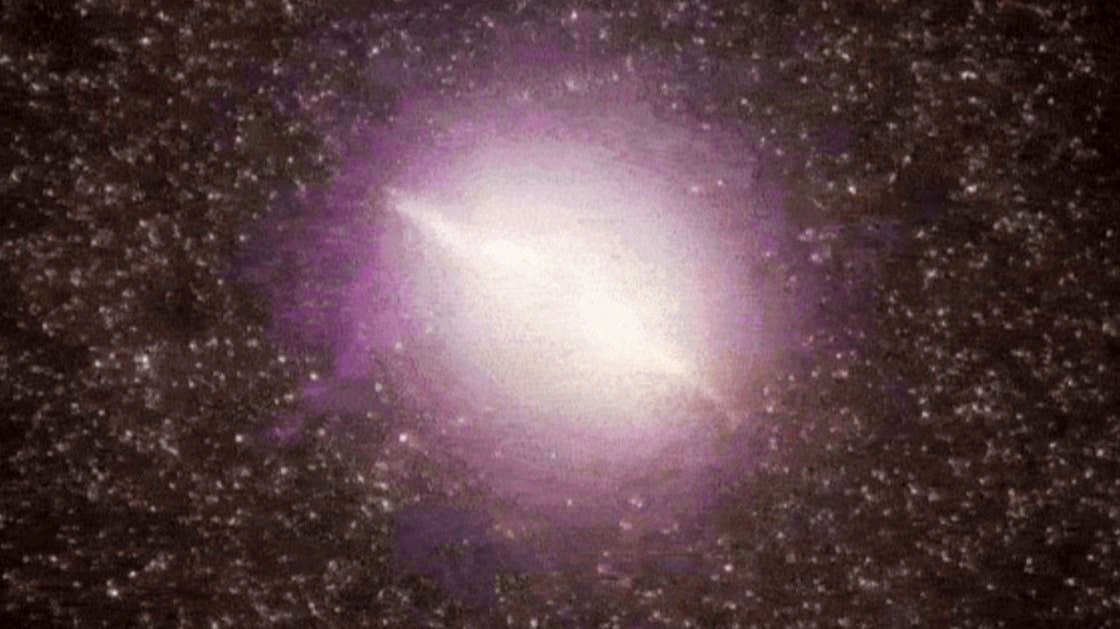
In a remarkable astronomical event, scientists are studying a supermassive black hole located at the center of a distant galaxy that has been continuously ejecting high-speed material for six years after consuming a star that ventured too close. This ongoing activity is drawing significant interest from the scientific community.
Utilizing radio telescopes in New Mexico and South Africa, researchers have been tracking the black hole, which is situated approximately 665 million light-years from Earth.
This phenomenon is particularly noteworthy because the black hole faced challenges in absorbing the star. The ejection of material did not commence until two years after the star was torn apart by the black hole's immense gravitational forces.
Astronomer Yvette Cendes from the University of Oregon, who is the lead author of a study published in the Astrophysical Journal, remarked:
"The sustained increase in brightness of this source is unprecedented. It is now approximately 50 times brighter than when it was first detected, and it exhibits remarkable brightness in radio wavelengths, showing no signs of abating. This is highly unusual."
The black hole has a mass estimated at about fivemilliontimes that of the sun, making it comparable in size to the supermassive black hole at the center of our Milky Way galaxy, which has a mass of four million times that of the sun.
The star that was consumed was a red dwarf, with a mass roughly one-tenth that of the sun.
Scientists are left pondering a crucial question: How long will this extraordinary ejection persist?
Researchers anticipate that the activity may peak within thisyearornext year, presenting a cosmic event unlike any previously documented.
This phenomenon offers a new perspective on the behavior of supermassive black holes and their interactions with stars that fall within their gravitational influence, marking a significant advancement in our understanding of these enigmatic cosmic entities.