King Cheops' Boat Returns to Egypt After 4,500 Years
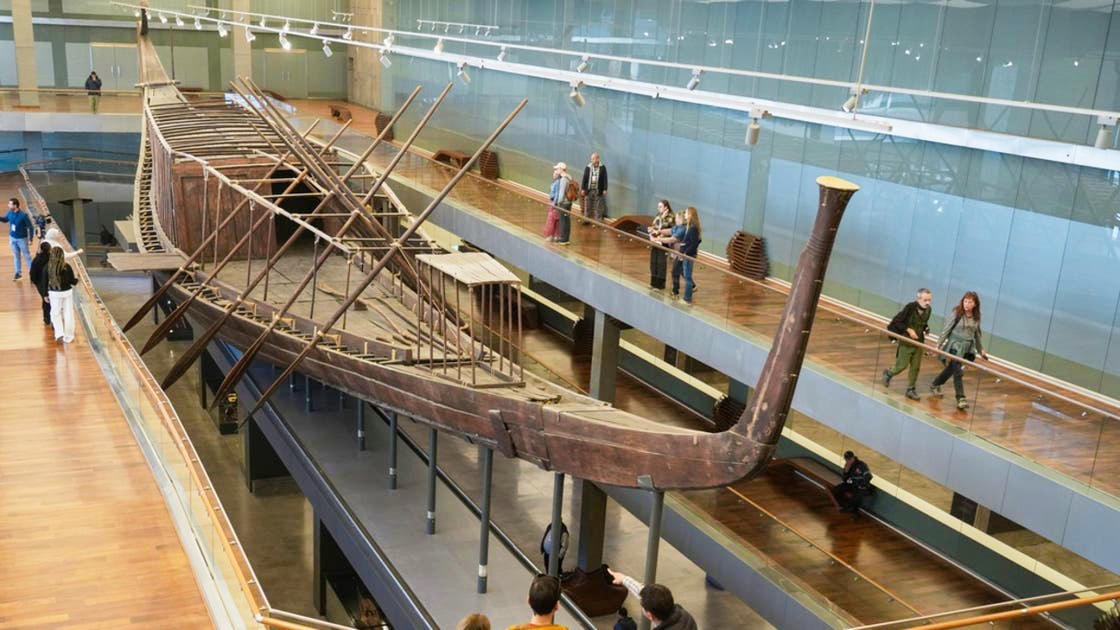
In a remarkable initiative that captivates visitors with a blend of historical reverence and modern craftsmanship, restoration teams at the Grand Egyptian Museum have begun reconstructing a rare pharaonic boat attributed to King Cheops. This effort is taking place under the watchful eyes of the public, marking one of the largest archaeological restoration projects in recent history.
The vessel measures approximately 42 meters in length and is composed of around 1,650 cedar wood pieces, meticulously assembled in the exhibition hall alongside a twin boat that has already been reconstructed and displayed for several years.
The two boats were discovered in 1954 in two pits located on the southern side of the Great Pyramid, with recovery efforts for their wooden components commencing in 2014.
Project officials have stated that the restoration process is expected to take about four years due to the fragility of the components and the complexity of the work, which requires detailed documentation of each step to return the boat to its original state after more than 4,500 years.
Egypt's Minister of Tourism and Antiquities, Sherif Fathy, described the start of the restoration as "one of the most significant restoration projects of the 21st century," emphasizing that what visitors are witnessing is not merely technical work but a historical moment that reinterprets a chapter of ancient Egyptian civilization for the world.
The exact purpose of these boats remains a topic of debate among scholars; some believe they were used to transport King Cheops' body during his burial ceremony, while others suggest they were intended for his symbolic journey to the afterlife with the sun god Ra.
The Grand Egyptian Museum (GEM) is the largest archaeological museum in the world, housing approximately 50 thousand artifacts, including the complete collection of treasures from King Tutankhamun. Located near the Pyramids of Giza, museum officials hope to boost Egyptian tourism and the economy through this unique cultural and educational experience that brings visitors face to face with some of humanity's greatest historical legacies.