Ancient Child Tattoos Discovered in Sudan: Insights into Nubian Practices
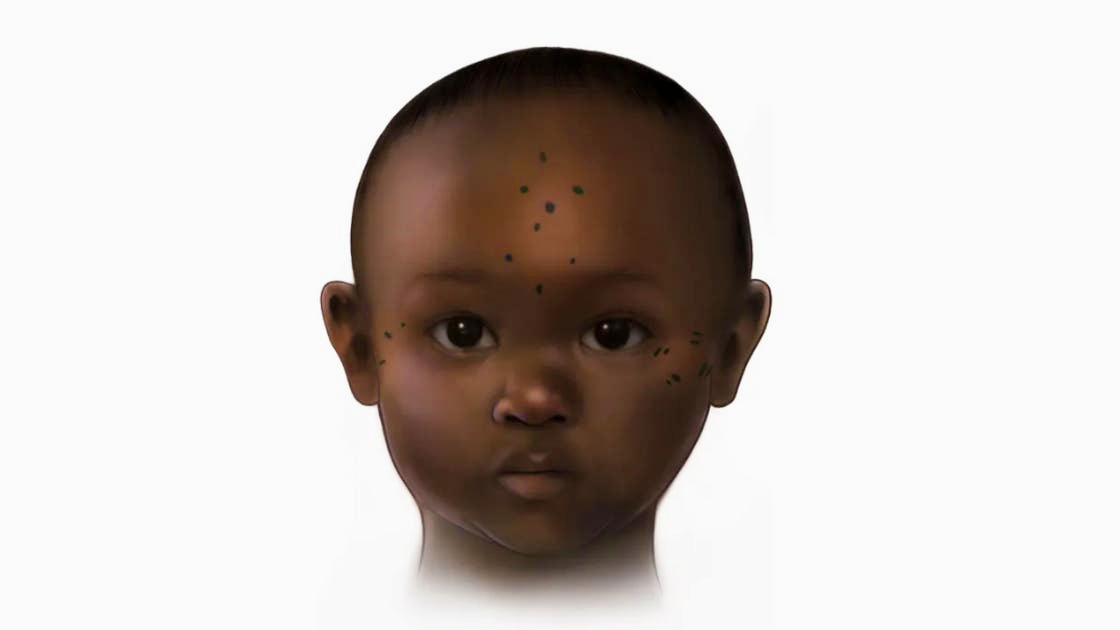
An international research team led by Dr. Ann Austin from the University of Missouri-St. Louis has uncovered one of the oldest and rarest childhood practices in history: the facial tattooing of children over 1,400 years ago in the Nubian region of northern Sudan.
The study involved analyzing 1,048 mummified human remains from three archaeological sites using advanced techniques that combined microscopy and infrared lighting to reveal hidden tattoo features.
This led to the identification of 27 individuals of varying ages and genders with tattoos, including 17 confirmed cases.
The most surprising findings came from the Christian site of Kolobnarti, dated between 650 and 1000 AD, where it was found that most of the tattooed individuals were children under the age of eleven.
* Youngest Tattooed Child
The results indicated that the youngest tattooed child was an 18-month-old infant, while a three-year-old girl displayed two overlapping tattoos on her forehead, suggesting that some children may have been tattooed multiple times.
* Tattoo Designs and Their Significance
The tattoos consisted of simple geometric shapes made of dots and lines, with the most notable pattern being four dots in the center of the forehead, which researchers interpret as a symbol of the Christian cross, coinciding with the introduction of Christianity in the Nile Valley.
Dr. Austin states:
"If tattooing was a sign of religious affiliation, it could have served as a permanent means to establish the Christian identity of children in a newly Christian community."
* Possible Medical Explanation
The team is also exploring a medical rationale, believing that tattooing may have served as a preventive or healing measure, possibly aimed at protecting children from headaches or fevers associated with the malaria prevalent in the region at that time.
* Techniques Used
The analyses revealed that the Nubians used sharp knives instead of fine needles, making the process less complicated compared to modern tattooing methods.
In conclusion, Austin remarks:
"The form of tattooing in Kolobnarti, which could be performed quickly, seems no more extreme than ear-piercing for children or newborn circumcision in many cultures, reflecting parents' concerns and their desire to protect their children both spiritually and physically."
This discovery opens a new window into understanding childhood culture and the spiritual as well as health protection practices in ancient Nubia, confirming that tattooing was not merely ornamental but part of identity, culture, and the medical and social heritage.