Nvidia Unveils Alpamayo AI Model for Autonomous Vehicle Decision-Making at CES 2026
Nvidia has unveiled a new family of open-source AI models named Alpamayo at CES 2026, aimed at enhancing the decision-making capabilities of self-driving vehicles in complex scenarios.
The Alpamayo models utilize logical analysis and reasoning, enabling vehicles to handle rare or emergency situations on the road and make the safest choices while providing explanations for their actions.
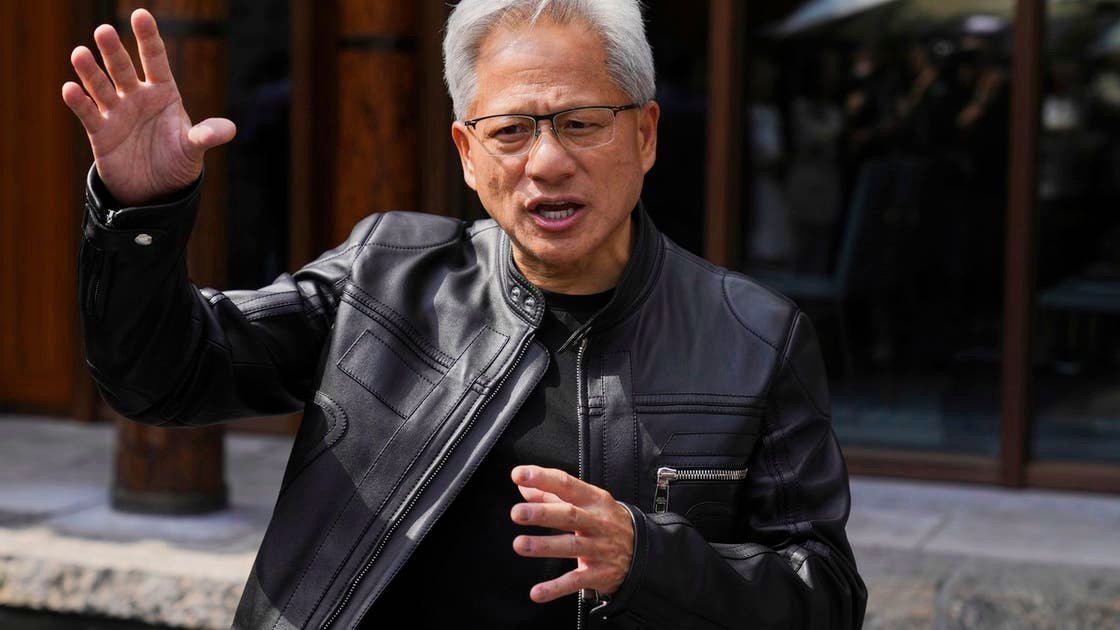
Jensen Huang, CEO of Nvidia, stated:
"We are at a pivotal moment we can call 'Chat GPT for embodied AI,' where machines begin to understand, analyze, and act in the real world."
The first model in this series, Alpamayo 1, is a language-based visual model built on a framework of 10 billion parameters.
This model empowers vehicles to navigate complex scenarios, such as traffic light failures at busy intersections, without prior specific training for those situations.
Ali Kani, Vice President of Nvidia's automotive division, highlighted that the system resolves challenges by breaking them down into steps, evaluating all options, and selecting the safest route.
Huang elaborated that the role of Alpamayo extends beyond controlling steering, braking, and acceleration; it also involves anticipating future actions and informing the driver about the decisions being made and their rationale, ultimately determining the optimal path.
The source code for Alpamayo 1 is available on the Hugging Face platform, allowing developers to enhance its performance, create smaller and faster versions, or utilize it for training simpler vehicle systems, as well as developing tools like automated video classification and evaluation systems for vehicle decisions.
Developers can also leverage Nvidia's Cosmos system, which generates artificial environments, facilitating the training and testing of autonomous applications with a blend of real and virtual data.
Cosmos serves as a platform for creating environmental representations that help vehicles predict and make decisions more safely and realistically.
This announcement positions Nvidia at the forefront of the autonomous driving race, promising a future where intelligent vehicles can think and act like humans while ensuring the highest safety standards on the roads.