Gaza's Missing Persons Crisis Deepens Amid DNA Testing Ban
January 5, 2026217 AufrufeLesezeit: 2 Minuten
Schriftgröße
16
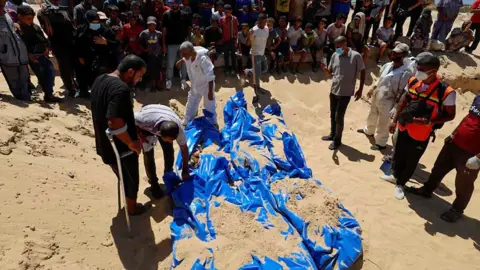
The plight of missing persons in Gaza is worsening as hundreds of unidentified bodies continue to be buried, with Israel preventing the introduction of DNA testing equipment. This situation is evolving into a long-term humanitarian and social crisis. As time passes, the chances of identifying these victims diminish, especially with thousands of bodies trapped beneath the rubble of homes destroyed during the conflicts.
Waiting Without Answers
Since the morning of October 7, 2023, contact has been lost with Abdullah Ramzi Al-Qassas after he left his home in the Al-Zeitoun neighborhood in eastern Gaza, and his fate remains unknown. His wife, Kawkab Sayam, has been living in a state of cruel anticipation for over two years, caught between hope and despair.
She states, "I don’t know if my husband is on earth or in heaven… Sometimes I just wish to know, even if he is imprisoned," highlighting that the absence of medical laboratories has eliminated any chance of discovering her husband’s fate or caring for him.
Destruction Complicates Victim Identification
Ahmed Dhahir, the Director General of Forensic Medicine in Gaza, confirms that the lack of DNA testing equipment and technical capabilities significantly hampers the identification of bodies. He explained that the intensity of the weapons used has led to decomposition and dismemberment of bodies, with some being scavenged by animals, particularly in areas difficult for rescue teams to access. Additionally, the deaths of several tissue specialists have complicated the situation and weakened the medical teams' diagnostic capabilities.
Temporary Burials Awaiting Resolution
According to Dhahir, remains that reach forensic medicine are stored according to legal timeframes and then buried in special graves with identification codes, hoping that DNA testing equipment will be introduced before the remains decompose, causing families to lose their last threads of hope.
Calls for Urgent International Pressure
Mahmoud Ashour, a spokesperson for forensic evidence in Gaza, has called for immediate international intervention to exert pressure on Israel to allow the introduction of necessary technical and technological equipment, particularly DNA testing laboratories. He emphasized that Gaza's denial of these capabilities is not only a technical barrier but also "an affront to the dignity of the victims and a continuous suffering for their families," who continue to seek one answer: Where are our children?