Astronomers Observe Unusual Gas Ejection from Black Hole for Six Years
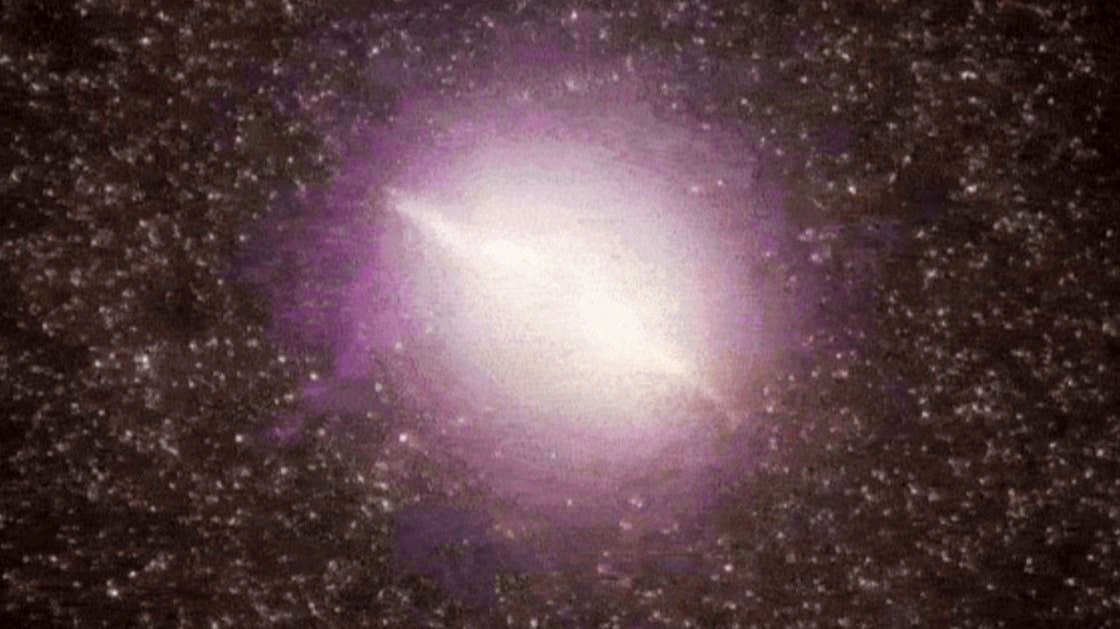
In an unprecedented astronomical event, scientists are studying the behavior of a supermassive black hole located at the center of a distant galaxy, which has been ejecting high-speed material after consuming a star that ventured too close. This unusual activity has been ongoing for six years.
Using radio telescopes in New Mexico and South Africa, researchers have tracked the black hole, situated approximately 665 million light-years away from Earth.
This phenomenon is notable due to the challenges the black hole faces after consuming the star, as the remaining material only began to escape two years after the star was torn apart by the immense gravity of the black hole.
Astrophysicist Yvette Sindes from the University of Oregon, the lead author of the study published in the Astrophysical Journal, stated:
"The continuous increase in brightness of this source is unprecedented. It is now about 50 times brighter than when it was first discovered, emitting remarkably strong signals in the radio wavelength range, with no signs of diminishing. This is entirely unusual."
The black hole has a mass approximately fivemilliontimes that of the Sun, making it comparable in size to the supermassive black hole at the center of our Milky Way, which has a mass of about four million times that of the Sun. The star that was consumed was a red dwarf with a mass of roughly one-tenth that of the Sun.
The intriguing question for scientists remains: How long will this remarkable ejection continue?
Researchers anticipate that it will peak in thisyear or next year, presenting a cosmic spectacle unlike anything previously observed.
This phenomenon opens a new avenue for understanding the behavior of supermassive black holes and their interactions with the stars that fall victim to their gravity, marking a new chapter in the study of the universe's most enigmatic objects.