Exploring Biocomputers: The Intersection of Human Brain Cells and Artificial Intelligence
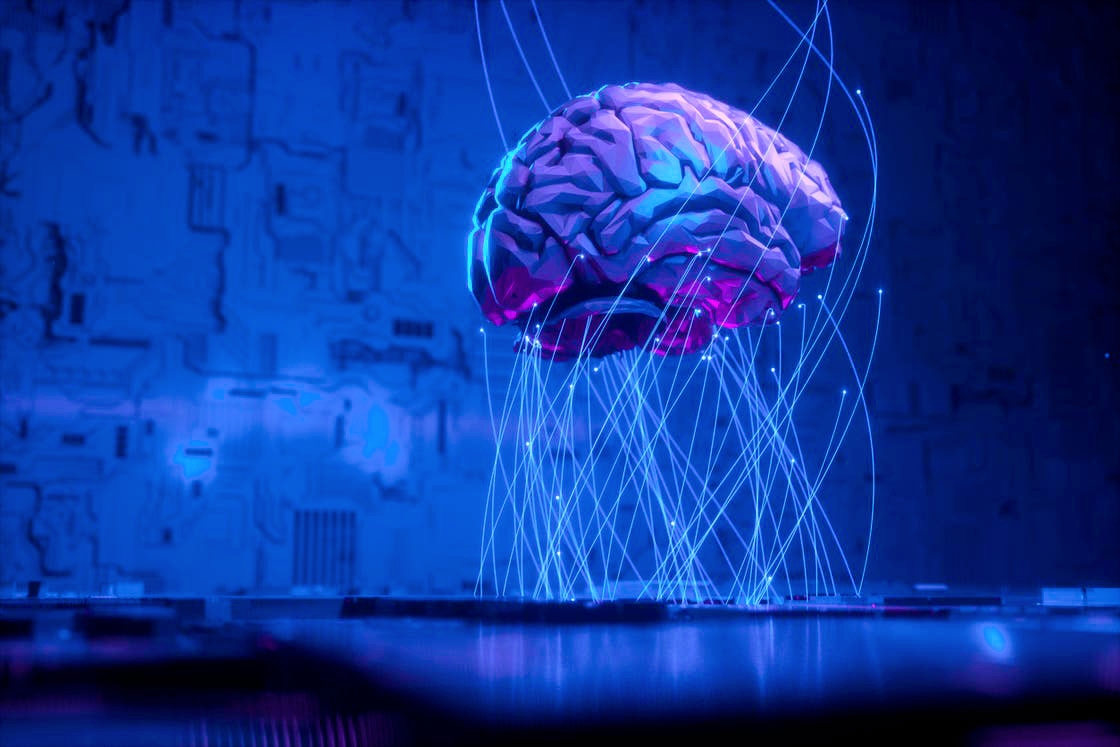
While many AI researchers concentrate on the limitations of current technologies, a novel approach is gaining traction: biocomputers constructed from living human brain cells.
According to Science Alert, these biocomputers are still in their nascent stages but have demonstrated the ability to perform basic tasks, including playing Pong and recognizing speech.
This technology is driven by three key trends:
• An influx of venture capital directed towards artificial intelligence, facilitating quick funding for theoretical innovations.
• Advances in techniques for cultivating brain tissue outside the body, which have proven useful in the pharmaceutical sector.
• Progress in brain-computer interfaces, which has blurred the lines between biological systems and machines.
Bran Servais, a biomedical engineering researcher at the University of Melbourne, poses critical questions:
Are these advancements genuine breakthroughs or merely a media phenomenon? What ethical considerations arise from utilizing human brain tissue as computational elements?
* Understanding Biocomputers
For over fifty years, scientists have been cultivating neurons on microelectrode arrays to observe their behavior.
In the early 2000s, researchers initiated the development of bidirectional communication between neurons and electronic devices, setting the stage for hybrid biocomputers.
Subsequently, the field of brain organoids emerged; in 2013, scientists demonstrated that stem cells could self-organize into brain-like three-dimensional structures.
With the rise of "organ-on-a-chip" devices that replicate bodily functions externally, organoids have become increasingly common in drug testing and developmental research.
Nevertheless, neural activity remains primitive, lacking the complexity of true brain functions, and there are no indications of consciousness or self-awareness.
* The Emergence of "Organoid Intelligence"
In 2022, Cortical Labs in Melbourne showcased cultured neurons learning to play Pong within a controlled environment.
This research garnered media attention not solely for the experiment itself but also for the controversial term "embodied cognition," which neuroscientists criticized as ethically and scientifically overstated.
Researchers later proposed the broader term "organoid intelligence"; however, this does not equate to true artificial intelligence, as significant gaps remain between the two.
* Ethical Considerations Lagging Behind
As technology progresses, ethical frameworks have not kept pace, often viewing organoids primarily as medical tools rather than as hybrid computational systems.
Researchers have urged for an expedited update of ethical guidelines, particularly as this research moves toward commercialization.
* A Competitive Landscape in Research and Commercialization
Currently, universities and companies in the US, Switzerland, China, and Australia are competing to develop hybrid biocomputing platforms:
• Swiss company FinalSpark offers remote access to its neural organoids.
• Cortical Labs is set to launch a desktop biocomputer named CL1, targeting researchers beyond the pharmaceutical sector, including AI developers.
Academic ambitions have also broadened, with a team at the University of California proposing to utilize organoids to forecast oil spill trajectories in the Amazon by 2028.
* The Future: Curiosity or a Paradigm Shift?
As of now, there are no signs of genuine intelligence or self-awareness; existing systems exhibit only basic responses and adaptations.
Current priorities include:
• Reproducing prototypes
• Scaling them up
• Identifying practical applications, such as alternatives to animal models in neuroscience and toxicology research, or predicting brain activity related to conditions like epilepsy.
However, the ethical dilemmas are substantial:
At what point does a system of human cells qualify as intelligent or warrant ethical consideration? How can society regulate biological systems that function similarly to small computers?
Although this technology is still in its early phases, discussions surrounding consciousness, intelligence, and ethics may become increasingly urgent in the near future.