Could the Universe Be Facing Its End? Scientists Uncover 'Great Contraction' Phenomenon
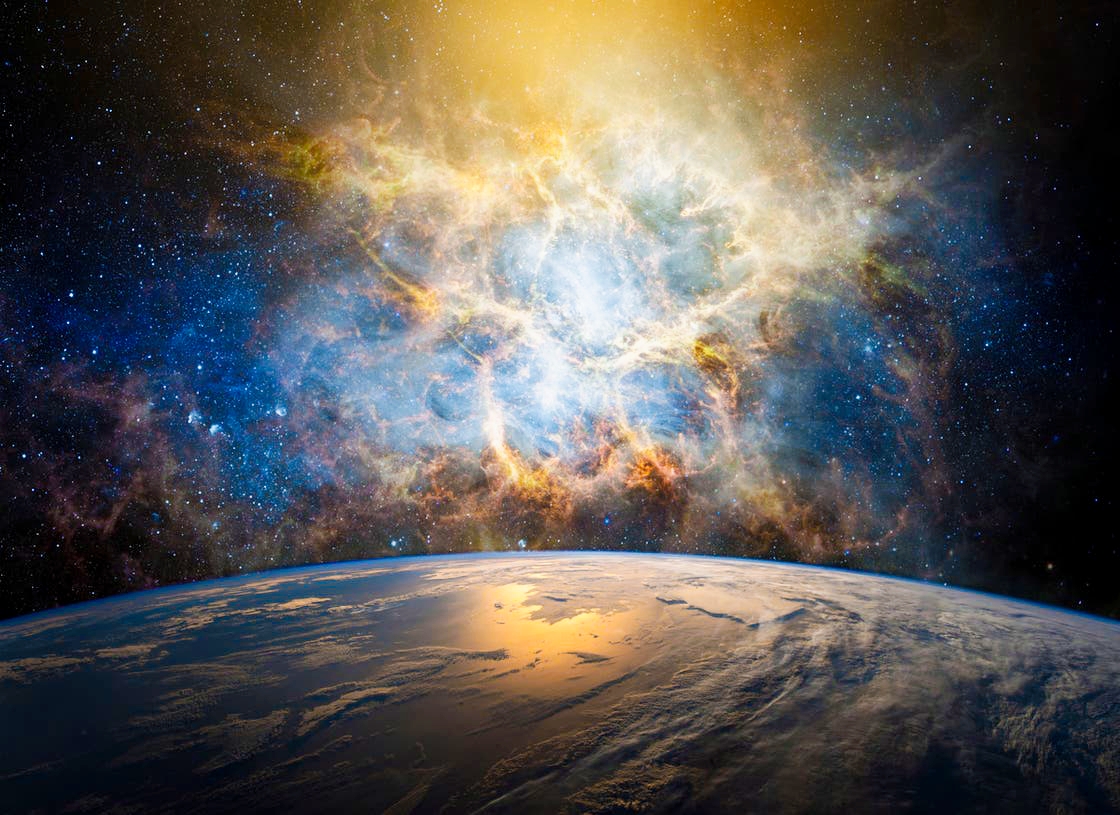
Researchers in South Korea have identified a controversial new astronomical phenomenon known as the great contraction, which could signal the end of the universe, rather than just life on Earth.
The study indicates that the universe's expansion may gradually halt due to the diminishing effects of dark energy, the mysterious force discovered in 1998 that has been driving the universe's accelerated expansion.
If dark energy weakens, gravitational forces may begin to pull galaxies together, potentially leading to a universal contraction.
* Changing Acceleration of the Universe
The research team, led by Professor Young-Wook Lee from Yonsei University in Seoul, analyzed data from supernovae, which provided the first evidence of dark energy nearly three decades ago.
The findings indicated that the acceleration of galaxies has not stabilized but has started to slow down, raising the possibility of a future great contraction.
Professor Lee stated:
"If dark energy continues to weaken, it may become so feeble that gravity will start to pull galaxies together, potentially leading to the great contraction."
* Scientific Controversy
Despite the excitement surrounding this discovery, not all astronomers are convinced by the theory. Professor George Efstathiou from the University of Cambridge described the concept as weak, suggesting that the results might merely reflect the complexities of supernova explosions, though he did not entirely dismiss the possibility.
This discovery emerges amid numerous studies attempting to elucidate the universe's fate, oscillating between infinite expansion due to dark energy and potential contraction driven by gravity.
Other theories propose darker scenarios, such as the big rip, which could lead to the disintegration of atoms if dark energy accelerates unexpectedly.
* Recent Developments
In March, the Dark Energy Spectroscopic Instrument (DESI) installed at a telescope in Arizona revealed surprising data indicating that the acceleration of galaxies changes over time, prompting scientists to explore new mechanisms that could reshape our understanding of physics and the universe.
Currently, the prevailing view is that the universe is expanding with nearly constant dark energy, but these new results could herald a significant scientific revolution in our comprehension of the universe and its future.