Time Magazine Unveils 2025's Top Five Innovations: AI and Robotics Reshape Everyday Life
December 25, 2025260 ViewsRead Time: 3 minutes
Font Size
16
Time magazine has released its annual roundup of the most significant inventions of 2025, highlighting innovations that enhance quality of life, advance artificial intelligence, and bolster digital security.
Arabic.net has compiled a selection of these noteworthy innovations, particularly those that are practical for daily use or represent significant technological advancements.
1- Unitree R1: A Versatile Robot at an Affordable Price
The Unitree R1 robot, developed by Chinese company Unitree Robotics, has emerged as a standout innovation in 2025. Launched in July, this programmable bipedal robot is priced at an accessible $5,900, significantly lower than many other humanoid robots on the market.
Weighing approximately 23 kilograms, the R1 is equipped with 26 joints and features integrated artificial intelligence for voice recognition and image processing. It has garnered attention for its ability to execute complex movements such as running, boxing, and flipping, making it a valuable tool for researchers, developers, and educational institutions.
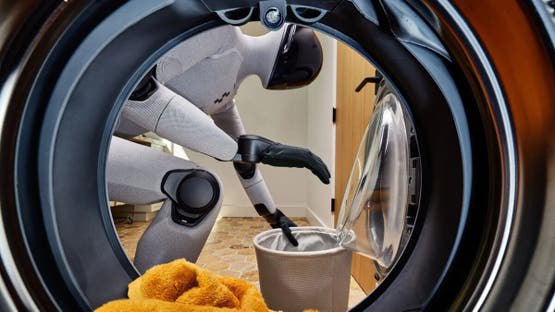
2- Figure 03: A Home Robot Making Strides Towards Automation
The humanoid robot Figure 03 signifies a serious effort to integrate robotics into everyday household tasks. Launched in October, it can perform basic chores like folding laundry and organizing the dishwasher, though it still requires some human assistance.
The company is enhancing the Helix neural network by gathering extensive data, with the goal of enabling the robot to operate more independently. CEO Brett Adcock notes that the evolution of robotics is advancing at a pace comparable to that of artificial intelligence.
3- The First Compact Home UV Printer
The EufyMake UV printer has transformed the printing landscape, utilizing ultraviolet light to rapidly dry ink on over 300 materials, including metal, wood, and acrylic.
The company successfully raised around $47 million through crowdfunding to develop the world's smallest home UV printer, which is 90% smaller than traditional industrial printers. It can print three-dimensional textures and customizable designs, offering new possibilities for hobbyists and small business owners.
4- DeepSeek R1: A Disruptive AI Model
The introduction of the DeepSeek R1 model in early 2025 has disrupted the artificial intelligence sector. Developed by a Chinese startup, this advanced model rivals leading offerings from OpenAI, according to industry standards.
The model's training cost was only about $6 million, with lower computational demands, and it remains free to use, indicating a significant shift in the competitive landscape of artificial intelligence.
5- Pindrop Pulse: A New Defense Against Deepfakes
The Pindrop Pulse application addresses the growing concerns surrounding deepfakes, particularly in audio and video communications. CEO Vijay Palasubramanian emphasizes that deepfakes pose risks to identity, consent, and accountability.
The application can verify a speaker's identity within just two seconds of a call starting, helping to mitigate fraud risks. This is particularly relevant given the reported losses of millions of dollars due to deepfake-related fraud, including a notable incident that resulted in a $25 million loss last year.