Exploring Legacy and Loss in "My Father and Gaddafi" at Doha Film Festival
November 26, 2025382 ViewsRead Time: 2 minutes
Font Size
16
The documentary "My Father and Gaddafi" has drawn notable interest from both critics and attendees at the first Doha Film Festival, which is set to run until November 28. The film delves into a deeply personal tragedy faced by its director, Jihan Al-Kikhia.
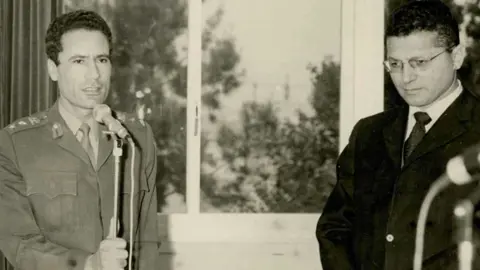
It recounts the story of her father, Mansour Al-Kikhia, who served as Libya's foreign minister before becoming an opponent of Muammar Gaddafi's regime. His transformation into a human rights advocate ultimately led to his mysterious disappearance and death, which ignited significant controversy.
Jihan Al-Kikhia shares her limited memories of her father, who vanished in 1993 when she was just six years old, describing these recollections as "fleeting flashes." The film aims to uncover the circumstances surrounding his disappearance, utilizing testimonies from over 60 individuals, archival materials, and personal home videos.
In her remarks to the press, Al-Kikhia expressed that the film seeks to "bridge generational gaps through art, fostering a deeper understanding of the past and liberating oneself from its shadows."
The film's production spanned nine years, and through its intimate visual narrative, it transforms the director's personal story into a broader discussion on human rights and the importance of confronting historical truths, asserting that "no one can evade the court of history and the justice of time."
It recounts the story of her father, Mansour Al-Kikhia, who served as Libya's foreign minister before becoming an opponent of Muammar Gaddafi's regime. His transformation into a human rights advocate ultimately led to his mysterious disappearance and death, which ignited significant controversy.
Jihan Al-Kikhia shares her limited memories of her father, who vanished in 1993 when she was just six years old, describing these recollections as "fleeting flashes." The film aims to uncover the circumstances surrounding his disappearance, utilizing testimonies from over 60 individuals, archival materials, and personal home videos.
In her remarks to the press, Al-Kikhia expressed that the film seeks to "bridge generational gaps through art, fostering a deeper understanding of the past and liberating oneself from its shadows."
The film's production spanned nine years, and through its intimate visual narrative, it transforms the director's personal story into a broader discussion on human rights and the importance of confronting historical truths, asserting that "no one can evade the court of history and the justice of time."