Libyan Prime Minister's Wife Sparks Debate on Women's Roles in Public Life
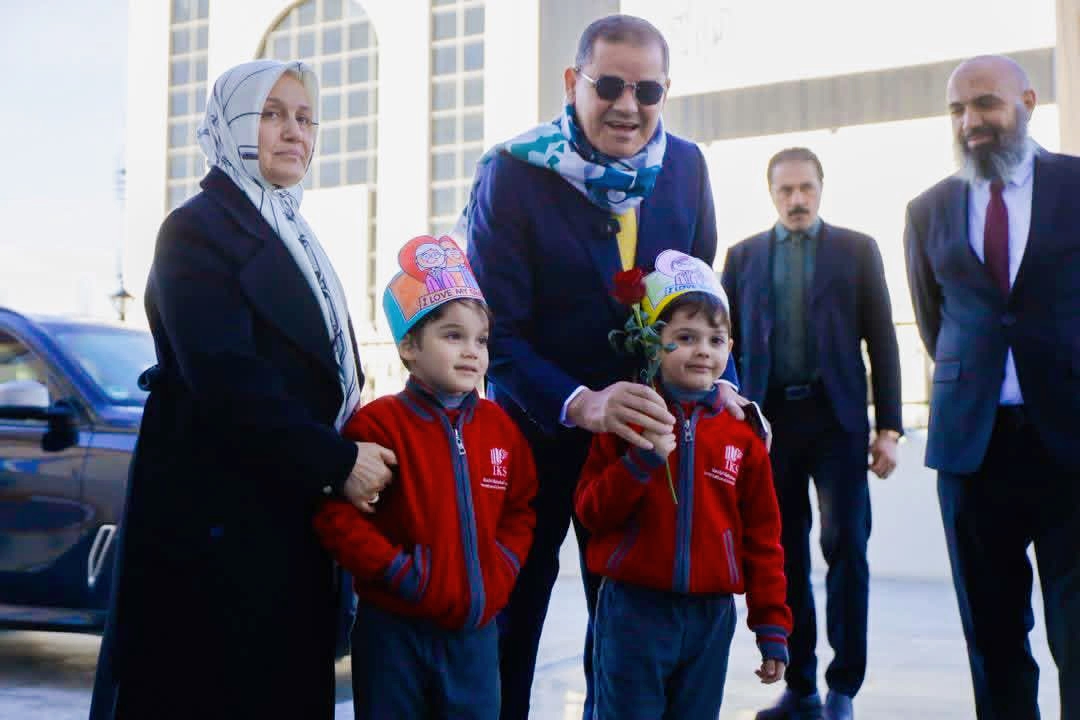
The first public appearance of Mrs. Abdul Hamid Dbeibeh, wife of the Libyan Prime Minister, has generated significant attention and debate on social media. This event is notable as it marks a departure from the Prime Minister's previous practice of keeping his family out of the public eye.
Mrs. Dbeibeh joined her husband at a social event at an elementary school in Misrata on Sunday, where they attended a celebration for "Grandparents' Day" alongside their grandchildren from his late son, Abdul Rahman.
The familial atmosphere of the occasion quickly became a focal point for public discussion.
Abdul Hamid Dbeibeh is known for his media strategy that emphasizes his personal image while being reluctant to showcase his family. Consequently, his wife's appearance has attracted considerable interest, even though her identity and personal details remain undisclosed.
The social media response extended beyond photos and videos, evolving into a broader conversation about the roles of officials' wives and their involvement in public life. Activist Mais Al-Rim Al-Qatari remarked that Mrs. Dbeibeh's presence was not merely a social gesture but a significant political and cultural statement reflecting women's status in Libyan society. She noted that such visibility could empower women and encourage their participation in public affairs.
Al-Qatari further suggested that the absence of officials' wives might imply an unwelcoming public sphere for women, while their presence could serve as a reassuring message that women have a rightful place in society.
Activist Raihan Al-Hadi echoed this sentiment, stating that Mrs. Dbeibeh's visibility in social and political contexts is essential. "While I may not agree with Dbeibeh's governance or personal views, the presence of his wife in the public eye carries important positive implications," she said.
Conversely, activist Ahmed Kabouti expressed a different perspective, arguing that women should adopt a supportive role within their families rather than engage directly in political matters.
This lively debate illustrates the varying opinions within Libyan society regarding women's roles and participation in public life, highlighting a divide between those who advocate for women's active involvement and those who prefer a more traditional approach.
Amidst the mixed reactions, Mrs. Dbeibeh's appearance stands out as a significant event that challenges longstanding norms and opens up discussions about women's representation, political symbolism, and the intersection of private and public life in contemporary Libya.