Mouse Gives Birth After Space Mission, Advancing Understanding of Reproductive Health in Space
December 30, 2025244 ViewsRead Time: 2 minutes
Font Size
16
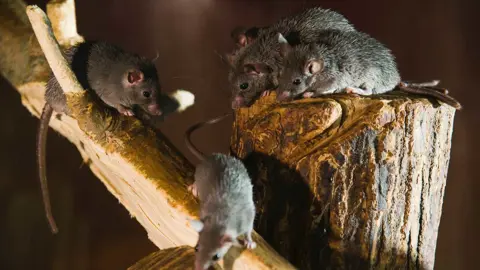
In a groundbreaking scientific achievement, the Space Technology and Engineering Center of the Chinese Academy of Sciences reported that a female mouse successfully gave birth to healthy offspring after returning from a mission aboard the Chinese space station.
Details of the Space Mission
Four mice were sent into space on October 31 aboard the manned Shenzhou-21 spacecraft, where they were housed in a controlled environment on the space station. They returned to Earth on November 14, and one female mouse gave birth to nine pups on December 10, with six surviving and showing signs of good health and normal activity.
Healthy Offspring and Maternal Care
Researchers observed that the mother mouse exhibited natural maternal behaviors after giving birth, and the vitality of the pups was considered a promising indicator of healthy development following their exposure to the space environment.
Impact on Reproductive Health
Wang Hongmei, a researcher at the Institute of Zoology at the Chinese Academy of Sciences, stated that the experiment demonstrated that short-term space travel does not adversely affect the reproductive capabilities of mice. She emphasized that the data gathered during this mission holds significant scientific value for understanding the effects of space on early mammalian development.
Challenges Encountered in Orbit
The mission experienced unexpected challenges, including a temporary food shortage due to adjustments in the return schedule of the Shenzhou-20 mission. The scientific team responded by providing water and utilizing soy milk as a temporary food source until conditions stabilized.
AI Monitoring of Space Life
Researchers employed an advanced artificial intelligence monitoring system to track the mice's behavior, sleep patterns, and feeding habits in real time, facilitating prompt decision-making during the mission.
A Pioneering Experiment in China
The Chinese University of Science confirmed that this mission marks the first comprehensive space experiment involving mammals in the history of the Chinese space program, covering all phases from pre-launch preparations to orbital experiments and subsequent analysis of results.
A Step Forward for Space Research
Scientists noted that this achievement opens avenues for more extensive research on mammals in space, focusing on post-birth growth monitoring and reproductive capabilities. These studies could reveal the long-term effects of space travel across generations, which is crucial for the future of extended space missions and potential colonization efforts.