Yemen's President Orders UAE Troops to Withdraw, Declares State of Emergency
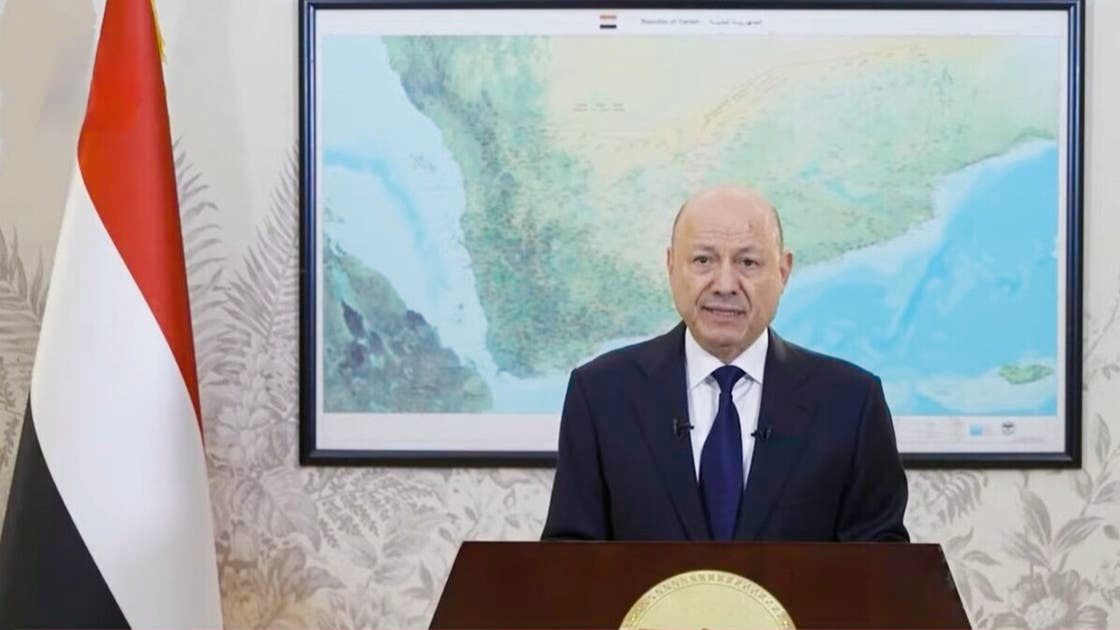
In a significant shift in Yemen's political landscape, President Rashad Al-Alimi of the Yemeni Presidential Leadership Council announced on Tuesday the termination of the joint defense agreement with the UAE. He called for UAE forces to depart Yemeni territory within 24 hours, stating that "Yemen cannot afford to open new fronts of attrition" and asserting that the country is "stronger with the support of the Saudi-led coalition."
During a televised address, Al-Alimi criticized the Southern Transitional Council for failing to engage in dialogue to resolve disputes, condemning recent arms shipments from the UAE to the council as an unacceptable escalation. He stated, "The role of the UAE has become directed against the Yemeni people."
To protect civilians, Al-Alimi announced a comprehensive 72-hour blockade—air, sea, and land—across Yemen and declared a state of emergency for 90 days, with the possibility of extension. He clarified that operations conducted by the Saudi coalition would not be affected by this blockade.
He also directed the "National Shield" forces to take control of military camps in the Hadramout and Al-Mahra governorates, empowering local governors to manage regional affairs.
Al-Alimi emphasized that "the blood of Yemenis is a red line that cannot be compromised," reiterating that the Presidential Leadership Council remains the sole legitimate body for resolving disputes. He rejected any attempts to exploit the southern issue for illegal political purposes, stating, "We have never abandoned our responsibilities in the southern governorates."
This announcement followed a statement from Major General Turki Al-Maliki, the coalition's spokesperson, who reported that two ships from Fujairah had arrived at the port of Al-Mukalla without official clearance, carrying weapons and military vehicles intended for the Southern Transitional Council. This action was deemed a breach of the ceasefire and UN Security Council Resolution 2216 from 2015.
Al-Maliki confirmed that the coalition had conducted a limited military operation targeting the weapons and vehicles offloaded at Al-Mukalla, asserting that the operation adhered to international humanitarian law and resulted in no casualties or collateral damage. He reiterated the coalition's commitment to de-escalation and to preventing any military support to Yemeni factions without coordination with the legitimate government, aiming to maintain security and stability and prevent further conflict escalation.